
This is an example of a News Page.
Modify this page to meet your needs. Delete the demo News articles and add yours.
Step by step directions for everything that you would want to do with this page are at the bottom of the page.
For more about News and how to use it on your site checkout the documentation at quickstart.arizona.edu





You can edit this page by simply clicking Edit at the top of the page.
To add News to this page, go to Content > Add Content > News.
You can edit any News by clicking on the News item, then clicking Edit at the top of that News page.
You can also edit a News item by hovering over the item and clicking the Edit icon (the pencil in the upper righthand corner), then selecting Edit.
You can delete any News on this page by clicking on the News item, then clicking Delete at the top of that News page.
You can also delete a News item by hovering over that item and clicking the Edit icon (the pencil in the upper righthand corner), then selecting Delete.
You can delete the page by clicking on Delete on top of the page.
- Edit this page
- Navigate to Menu Settings in the right sidebar
- Change the Menu Link Title as desired
- If you want to change the order of Menu Items, you can change the weight. Lower numbers will be on the left, higher numbers will be on the right.
whhat is thissss
Current Members
Graduate Researchers



Undergraduate Researchers
Cole Bellomo
Elise MacKirdy
Postdoctoral Researchers
Currently no post doctoral researchers
Elemental Sulfur
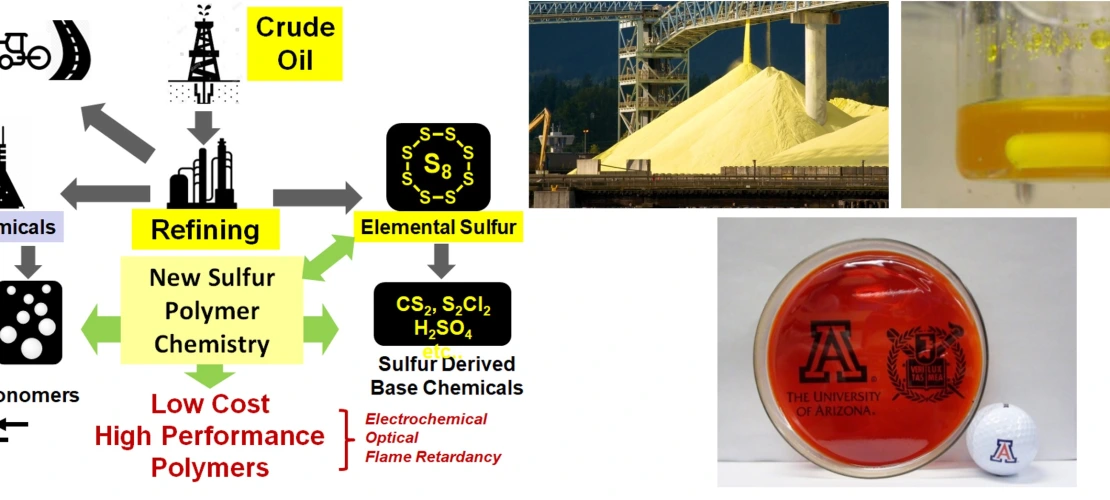
A novel, abundant feedstock for polymers and nanocomposite materials
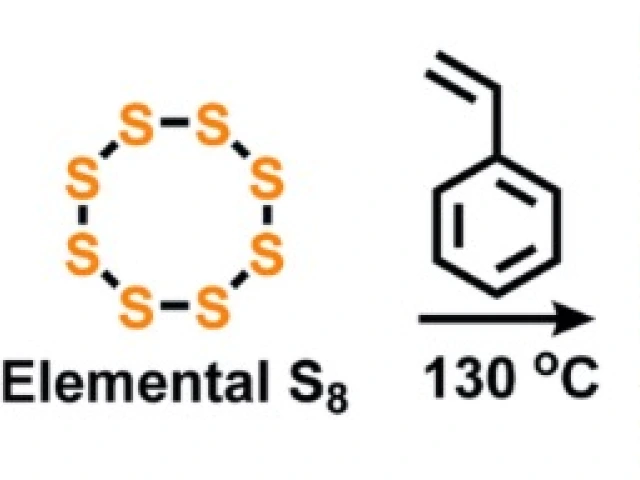
We have pioneered the utilization of elemental sulfur for novel polymers and nanocomposites. Sulfur is commonly used as a vulcanizing agent in the crosslinking of rubber for tires, however the use of elemental sulfur as the primary monomer, or comonomer for polymeric materials has not been widely explored. Elemental sulfur is currently produced on the level of 70 million tons annually, the majority of which is thru hydrodesulfurization of crude petroleum. Consequently, over 6 million tons of elemental sulfur is generated in excess, which creates exciting opportunities to develop new chemistry and processing to utilize sulfur as a feedstock for polymers. We have invented a new polymerization process, termed, inverse vulcanization, to directly convert elemental sulfur into high sulfur content polymers (Nature Chemistry 2013), which has since launched this technology as a new field in polymer science. Sulfur exhibits a number of useful properties, such as, high charge capacity for Li-insertion electrochemistry and high refractive index. However, the chemical modification of sulfur into useful materials remains a difficult technical challenge. Toward this end, we are developing new polymerization and processing methods for the direct utilization of sulfur to prepare thermosetting polymeric sulfur and nanocomposite materials.
Key publications:
Pyun, et al. Nature Chemistry 2013, 5, 518-524; ACS MacroLett. 2014, 3, 229; Prog. Polym. Sci. 2016, 58, 90; J. Polym. Sci., Part A: Polym. Chem. 2017, 55, 1635; Polym. Chem. 2019, 10, 4078; Angew. Chem. Int. Ed. 2021, 60, 22900; JACS 2022, 144, 5.
Graduate Researchers
Graduate Researchers






Matthew Malaker

Wyatt Wallis


High RI Polymers
High Refractive Index Polymers for Infrared Optics and Photonics
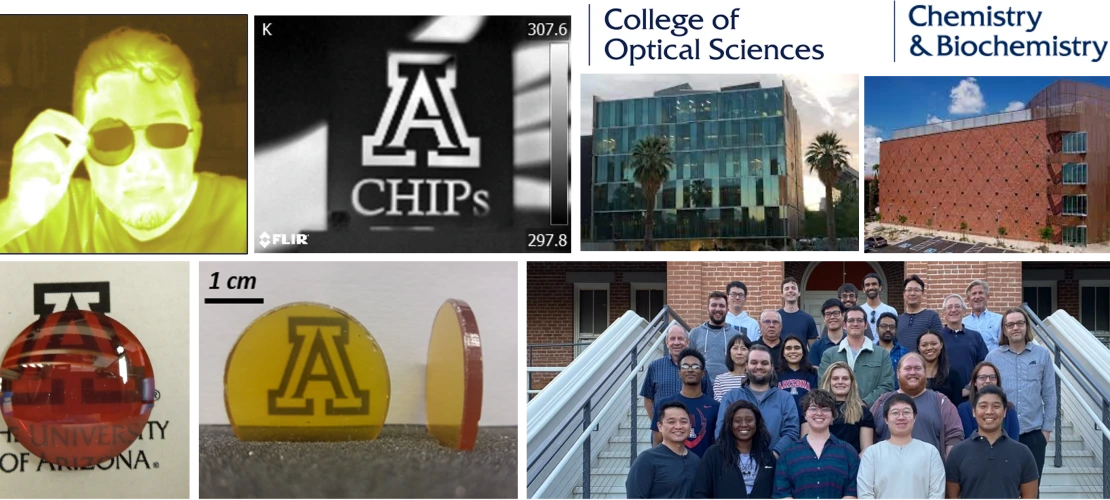
We have pioneered the development of ultra-high refractive polymers derived from the inverse vulcanization of elemental sulfur as the first class of optical polymers for infrared imaging and IR photonics. These polymers are termed, Chalcogenide Hybrid Inorganic/Organic Polymers (CHIPs) as a hybrid from elemental chalcogenides, such as, sulfur, selenium with organic comonomers.
We have a diverse and highly collaborative research term at the interface of synthetic organic chemistry, polymer chemistry, computational chemistry and optical sciences to prepare novel optical polymers and fabrication of these materials into plastic optics and photonic devices.
We have been recently awarded multi-PI grant for using computational chemistry thru the NSF and AFRL DMREF program to accelerate development of new IR polymers (~$2M USD for 4-yrs)
Key publications:
Pyun, J. Adv. Mater. 2014, 26, 3014; ACS Macro Letters, 2015, 4, 862; ACS Macro Lett. 2016, 5, 1152; ACS Macro Lett. 2017, 6, 500; ACS Macro Lett. 2018, 7, 875; Angew. Chem. Int. Ed.. 2019, 58, 17656; ACS Macro Lett. 2020, 9, 245; Science Advances 2020, 6, eabb5320; Adv. Opt. Mater. 2022, 10, 2200176.
Home

Welcome to Pyun Group!
Polymer & Materials Chemistry
Organic, Polymer, Materials Chemistry, Nanocomposites, Self-Assembly, Energy Storage & Conversion, Sulfur Utilization, Sulfur Chemistry & Processing, Batteries, Semiconductor nanoparticles, Heterostructured Nanorods, Photocatalysis.
Our research program is focused on the synthesis and characterization of novel polymeric and composite materials, with an emphasis on the control of nanoscale structure. Recent developments in polymer and colloid chemistry offer the synthetic chemist a wide range of tools to prepare well-defined, highly functional building blocks. We seek to synthesize complex materials from a "bottom up" approach via the organization of molecules, polymers and nanoparticles into ordered assemblies.
Control of structure on the molecular, nano- and macroscopic regimes offers the possibility of designing specific properties into materials that are otherwise inaccessible. We are particularly interested in compatabilizing interfaces between organic and inorganic matter as a route to combine the advantageous properties of both components. This research is highly interdisciplinary bridging the areas of physics, engineering and materials science with creative synthetic chemistry.
There are no upcoming events listed.
Check out our lab space!


Our Resources
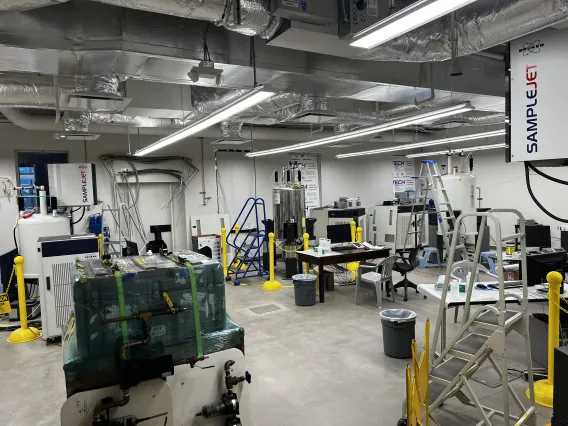
NMR Facility
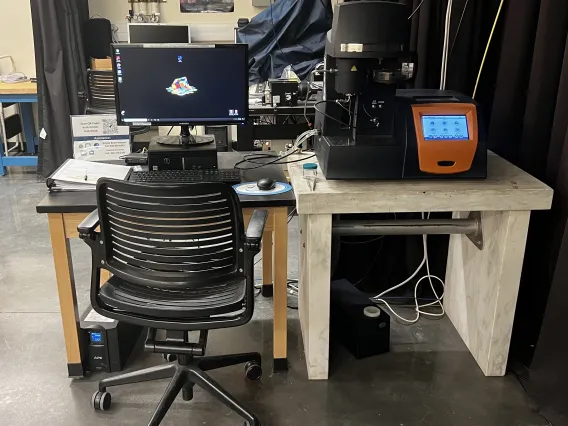
Thermal Gravitational Analysis
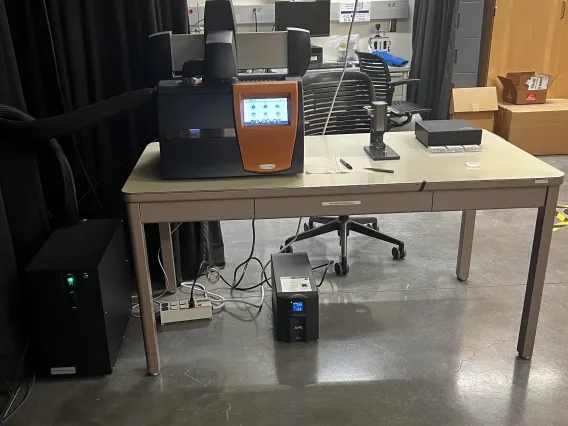
Differential Scanning Calorimetry
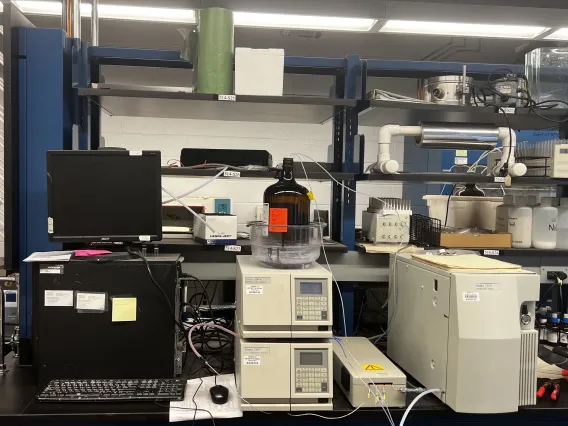
Size Exclusion Chromatography
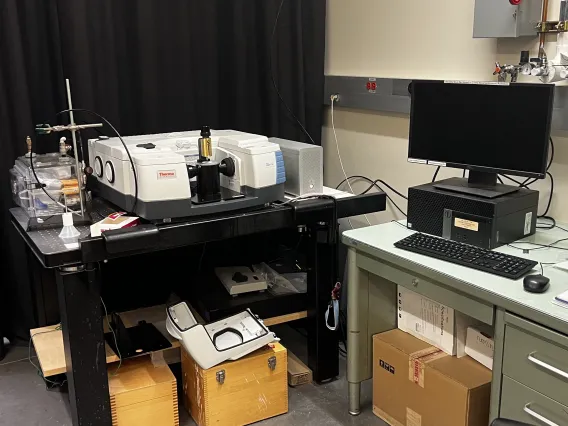
FT-IR
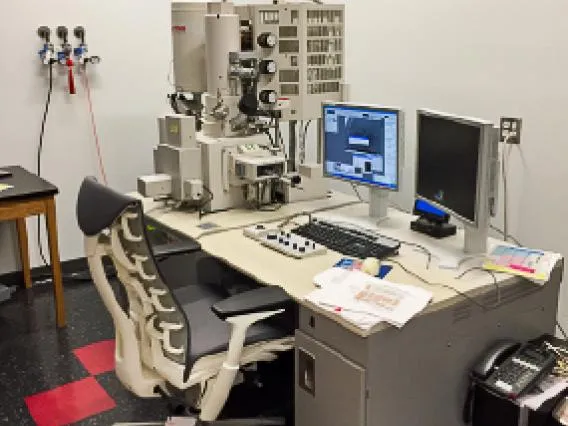
Electron Microscopy
Jeffrey Pyun, Ph.D.

Jeffrey Pyun, Ph.D.
Office: CSB 216
Lab: CSML 506 & 514
Email: jpyun@arizona.edu
Office Phone: 520-626-1834
Professor
Department of Chemistry and Biochemistry - University of Arizona
Professor (Joint)
Department of Optical Sciences - University of Arizona
Degrees
- B.A. Chemistry 1997, Northwestern University
- Ph.D. Chemistry 2002, Carnegie Mellon University
- Postdoc 2002-2004, IBM Almaden Research Center/UC Berkeley
Professor Jeffrey Pyun is currently a Professor in the Department of Chemistry & Biochemistry at the University of Arizona. In Fall 2004, he joined the faculty in Chemistry at the University of Arizona as an Assistant Professor, was promoted to Associate Professor in 2010 has been a Full Professor since 2015. Prof. Pyun’s research interests focus on the synthesis, self-assembly, characterization and device evaluation of novel polymers, nanoparticles, and nanocomposites materials. He is currently working on materials are anticipated to broadly impact the areas of information storage, optical materials, sulfur utilization, photocatalysis-solar fuels and energy storage technologies. In 2002, he obtained his Ph.D. in Chemistry with Prof. Krzysztof Matyjaszewski at Carnegie Mellon University working in the area of controlled radical polymerization applied to the synthesis of organic/inorganic hybrid materials. He then moved on to postdoctoral research in a joint position with Prof. Jean M.J. Fréchet and Prof. Craig J. Hawker at the IBM Almaden Research Center from 2002-2004 focusing on the synthesis of complex macromolecular architectures for catalysis. Since 2009, he has also served as a World Class University Professor and Adjunct Professor, in the School of Chemical & Biological Engineering at Seoul National University. Prof. Pyun’s research contributions have been recognized by a number of prestigious awards for young investigators, namely, the National Science Foundation CAREER Award, the Office of Naval Research Young Investigator Award, the IBM Faculty Award, the Alfred P. Sloan Foundation Research Fellowship and for important contributions to the magnetic tape industry thru the Information Storage Industry Consortium (INSIC) Technical Achievement Award. He has also been recognized by the University of Arizona with the Innovation and Impact Award from Tech Launch Arizona and was named the Academic Innovator of the Year in 2017 from the State of Arizona. He was also recently appointed as a Kavli Fellow, an ACS PMSE Fellow (2019), admitted into the National Academy of Inventors (2019) and named a Fellow of the Royal Society of Chemistry (2021). Prof. Pyun is also an Adjunct Professor to the faculty at Pusan National University in the Department of Chemistry and a Visiting Professor and Adjunct Professor at Korea University in the Department of Chemical Engineering since 2020.
AWARDS AND HONORS
-
Fellow of the Royal Society of Chemistry, 2021
-
U.S. National Academy of Inventors, Senior Member, 2019
-
Fellow of the American Chemical Society, Division of Polymeric Materials: Science & Engineering, 2019
-
Arizona Academic Innovator of the Year Award (from Arizona Governor's Office), 2017
-
Best Paper Award for 2016, Microscopy Society of America, 2017
-
Tech Launch Arizona Innovation and Impact Award in Chemistry, University of Arizona, 2016
-
Catalyst Award for Applied Chemical Sciences, University of Arizona, 2016, 2017
-
Frontiers in Science Lecture, Kavli Institute-U.S. National Academy of Sciences, 2015
-
Kavli Fellow, U.S. National Academy of Science, 2011
-
INSIC Technical Achievement Award for Magnetic Tape, 2009
-
Alfred P. Sloan Research Fellowship, 2009
-
IBM Faculty Award, 2007
-
Office of Naval Research Young Investigator Award, 2007
-
NSF CAREER Award, 2007
Magnetic Nanocomposites
Polymer & Inorganic Nanoparticle Materials
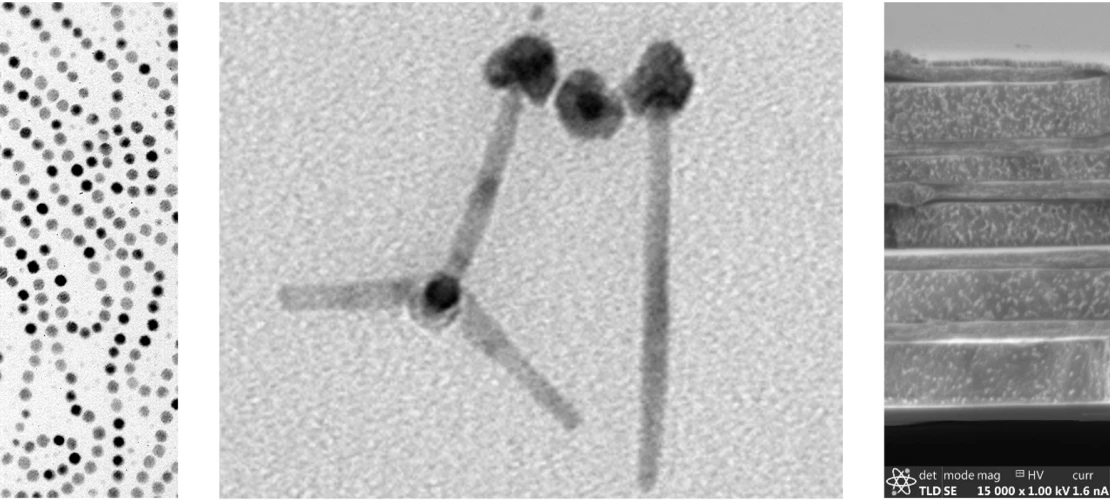
Our research program is focused on the synthesis and characterization of novel polymeric and inorganic metal, semiconductor and magnetic nanoparticles, with an emphasis on the control of nanoscale structure. Recent developments in polymer and colloid chemistry offer the synthetic chemist a wide range of tools to prepare well-defined, highly functional building blocks. We seek to synthesize complex materials from a "bottom up" approach via the organization of molecules, polymers and nanoparticles into ordered assemblies.
Control of structure on the molecular, nano- and macroscopic regimes offers the possibility of designing specific properties into materials that are otherwise inaccessible. We are particularly interested in compatabilizing interfaces between organic and inorganic matter as a route to combine the advantageous properties of both components. This research is highly interdisciplinary bridging the areas of physics, engineering and materials science with creative synthetic chemistry.
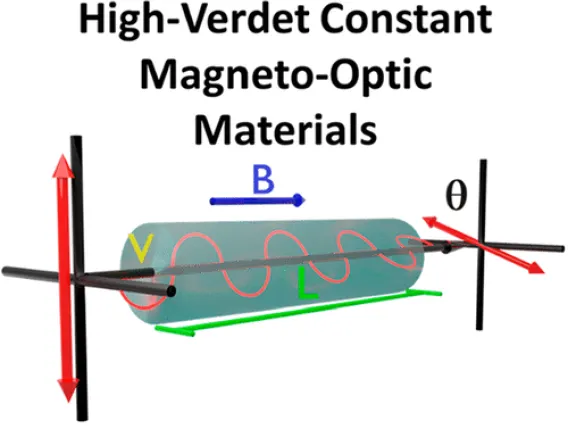
We are using these synthetic techniques & processing methods to prepare nanomaterials for applications in magneto-optical materials for Faraday Rotation, energy and magneto-responsive materials
Key publications:
Pyun et al., Chem. Mater. 2022, 34, 2531; Chem. Mater. 2021, 33, 5010; J. Mater. Chem. C. 2020, 8, 5417; Angew. Chem. Int. Ed. 2016, 55(5), 1787; ACS Nano 2015, 9, 4591; Prog. Polym. Sci. 2015, 40, 85; ACS Nano 2014, 8, 3272; ACS Nano 2012, 6, 8632; Chem. Mater. 2011, 23, 1120; J. Am. Chem. Soc. 2010, 132, 3234; ACS Nano 2009, 3 (10), 3143; ACS Nano 2007, 4, 279; J. Am. Chem. Soc. 2007, 129, 6291; J. Am. Chem. Soc. 2006, 128, 6562.
Metallopolymers
Artificial Enzymes for Catalytic Water-Splitting for Clean Hydrogen Production
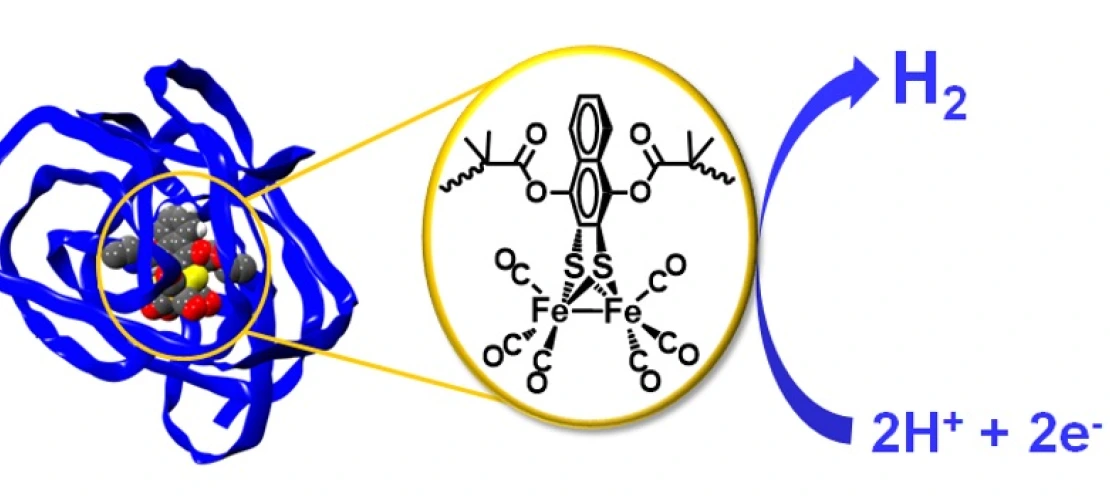
Diiron disulfide metallopolymers prepared by atom transfer radical polymerization (ATRP)
Metal-containing polymers can combine the useful properties of polymers with the key functions of metal complexes. These metallopolymers are applicable to a wide range of areas such as photovoltaics, stimuli responsive materials and catalysis. Catalysis, for example, includes designing artificial metalloenzymes which can mimic the biological functionalities by engineering the environment of a metal complex using polymeric materials. FeFe-hydrogenase enzyme found in bacteria is an efficient H2 generation catalyst and there has been extensive research on making FeFe-H2ase mimics to produce H2 as a carbon-free energy carrier. The mimics have shown high catalytic activities in organic media, however, limited lifetime, low oxygen stability and low solubility preclude the applicability of the mimics. We, for the first time, made a metalloinitiator from a FeFe-H2ase mimic to grow polymers via ATRP. The polymers not only provide water solubility and oxygen stability in neutral water but also enhance the activity of the complex by tuning the secondary coordination sphere of the mimic. We will discuss our most recent efforts to synthesize a difunctional metalloinitiator and metallopolymers grafted via ATRP.
Key publications:
Pyun et al., Proceedings of the National Academy of Sciences 2020, 117, 32947; Macromol. Rapid Commun. 2020, 41, 1900424; Angew. Chem. Int. Ed. 2019, 58, 7537; ACS Macro Lett. 2018, 7, 1383; Angew. Chem. Int. Ed.. 2018, 57, 11898.
News Page
This is an example of a News Page.
Modify this page to meet your needs. Delete the demo News articles and add yours.
Step by step directions for everything that you would want to do with this page are at the bottom of the page.
For more about News and how to use it on your site checkout the documentation at quickstart.arizona.edu
You can edit this page by simply clicking Edit at the top of the page.
To add News to this page, go to Content > Add Content > News.
You can edit any News by clicking on the News item, then clicking Edit at the top of that News page.
You can also edit a News item by hovering over the item and clicking the Edit icon (the pencil in the upper righthand corner), then selecting Edit.
You can delete any News on this page by clicking on the News item, then clicking Delete at the top of that News page.
You can also delete a News item by hovering over that item and clicking the Edit icon (the pencil in the upper righthand corner), then selecting Delete.
You can delete the page by clicking on Delete on top of the page.
- Edit this page
- Navigate to Menu Settings in the right sidebar
- Change the Menu Link Title as desired
- If you want to change the order of Menu Items, you can change the weight. Lower numbers will be on the left, higher numbers will be on the right.
Patents
Patents
Postdoctoral Researchers
Postdoctoral Researchers
Currently no post doctoral researcher
Publications
Research Articles

Patents
Pyun Group Research
Our research program is focused on the new synthetic polymer chemistry and development of advanced polymeric materials and nanocomposites. The Pyun group is an international renown group for developments in organic/inorganic hybrid polymers and materials for wide range of applications in photonics, energy, sustainability and defense (Nature Chemistry 2013, Advanced Materials 2014, Angewandte Chemie 2018, JACS 2022). We are a well-funded research program sponsored by US government agencies (National Science Foundation, Department of Defense, NIH, DOE) and numerous industrials partners.
Active Projects
Elemental Sulfur
A novel, abundant feedstock for polymers and nanocomposite materials
We have pioneered the utilization of elemental sulfur for novel polymers and nanocomposites. Sulfur is commonly used as a vulcanizing agent in the crosslinking of rubber for tires, however the use of elemental sulfur as the primary monomer, or comonomer for polymeric materials has not been widely explored. Elemental sulfur is currently produced on the level of 70 million tons annually, the majority of which is thru hydrodesulfurization of crude petroleum. Consequently, over 6 million tons of elemental sulfur is generated in excess, which creates exciting opportunities to develop new chemistry and processing to utilize sulfur as a feedstock for polymers. We have invented a new polymerization process, termed, inverse vulcanization, to directly convert elemental sulfur into high sulfur content polymers (Nature Chemistry 2013), which has since launched this technology as a new field in polymer science. Sulfur exhibits a number of useful properties, such as, high charge capacity for Li-insertion electrochemistry and high refractive index. However, the chemical modification of sulfur into useful materials remains a difficult technical challenge. Toward this end, we are developing new polymerization and processing methods for the direct utilization of sulfur to prepare thermosetting polymeric sulfur and nanocomposite materials.
Key publications:
Pyun, et al. Nature Chemistry 2013, 5, 518-524; ACS MacroLett. 2014, 3, 229; Prog. Polym. Sci. 2016, 58, 90; J. Polym. Sci., Part A: Polym. Chem. 2017, 55, 1635; Polym. Chem. 2019, 10, 4078; Angew. Chem. Int. Ed. 2021, 60, 22900; JACS 2022, 144, 5.

High refractive index polymers for infrared optics and photonics
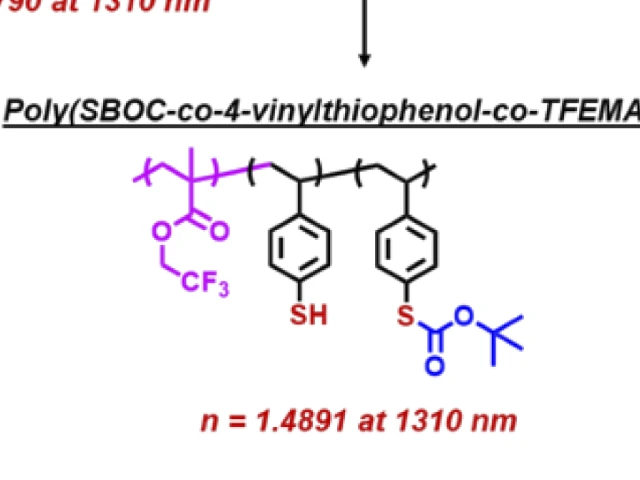
We have pioneered the development of ultra-high refractive polymers derived from the inverse vulcanization of elemental sulfur as the first class of optical polymers for infrared imaging and IR photonics. These polymers are termed, Chalcogenide Hybrid Inorganic/Organic Polymers (CHIPs) as a hybrid from elemental chalcogenides, such as, sulfur, selenium with organic comonomers.
We have a diverse and highly collaborative research term at the interface of synthetic organic chemistry, polymer chemistry, computational chemistry and optical sciences to prepare novel optical polymers and fabrication of these materials into plastic optics and photonic devices.
We have been recently awarded multi-PI grant for using computational chemistry thru the NSF and AFRL DMREF program to accelerate development of new IR polymers (~$2M USD for 4-yrs)
Key publications:
Pyun, J. Adv. Mater. 2014, 26, 3014; ACS Macro Letters, 2015, 4, 862; ACS Macro Lett. 2016, 5, 1152; ACS Macro Lett. 2017, 6, 500; ACS Macro Lett. 2018, 7, 875; Angew. Chem. Int. Ed.. 2019, 58, 17656; ACS Macro Lett. 2020, 9, 245; Science Advances 2020, 6, eabb5320; Adv. Opt. Mater. 2022, 10, 2200176.

Artificial Enzymes for Catalytic Water-Splitting for Clean Hydrogen Production
Diiron disulfide metallopolymers prepared by atom transfer radical polymerization (ATRP)
Metal-containing polymers can combine the useful properties of polymers with the key functions of metal complexes. These metallopolymers are applicable to a wide range of areas such as photovoltaics, stimuli responsive materials and catalysis. Catalysis, for example, includes designing artificial metalloenzymes which can mimic the biological functionalities by engineering the environment of a metal complex using polymeric materials. FeFe-hydrogenase enzyme found in bacteria is an efficient H2 generation catalyst and there has been extensive research on making FeFe-H2ase mimics to produce H2 as a carbon-free energy carrier. The mimics have shown high catalytic activities in organic media, however, limited lifetime, low oxygen stability and low solubility preclude the applicability of the mimics. We, for the first time, made a metalloinitiator from a FeFe-H2ase mimic to grow polymers via ATRP. The polymers not only provide water solubility and oxygen stability in neutral water but also enhance the activity of the complex by tuning the secondary coordination sphere of the mimic. We will discuss our most recent efforts to synthesize a difunctional metalloinitiator and metallopolymers grafted via ATRP.
Key publications:
Pyun et al., Proceedings of the National Academy of Sciences 2020, 117, 32947; Macromol. Rapid Commun. 2020, 41, 1900424; Angew. Chem. Int. Ed. 2019, 58, 7537; ACS Macro Lett. 2018, 7, 1383; Angew. Chem. Int. Ed.. 2018, 57, 11898.

Refractive Index Contrast Polymers: Photoresists for polymer waveguides, interconnects & photonic devices
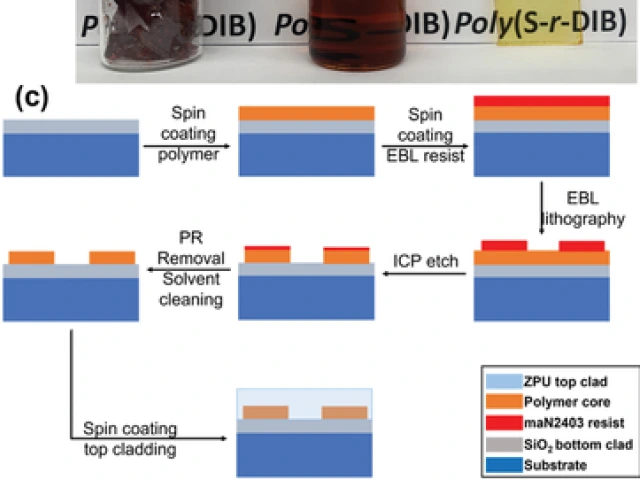
We have developed a new class of optical polymers, termed, Refractive Index Contrast (RIC) Polymers, which are a class of photoresists that can be used as a “dry-write” film for waveguide and optical interconnect fabrication. These new optical polymers are designed to enable rapid device component integration of photonic devices for next generation semiconductor chip fabrication.
Key publications:
Pyun et al., ACS Macro Lett. 2020, 9, 416; J. Lightwave Technol. 2022, 40, 3839; Optics Materials Express 2022, 12, 1932.

Polymer & Inorganic Nanoparticle Materials
Our research program is focused on the synthesis and characterization of novel polymeric and inorganic metal, semiconductor and magnetic nanoparticles, with an emphasis on the control of nanoscale structure. Recent developments in polymer and colloid chemistry offer the synthetic chemist a wide range of tools to prepare well-defined, highly functional building blocks. We seek to synthesize complex materials from a "bottom up" approach via the organization of molecules, polymers and nanoparticles into ordered assemblies.
Control of structure on the molecular, nano- and macroscopic regimes offers the possibility of designing specific properties into materials that are otherwise inaccessible. We are particularly interested in compatabilizing interfaces between organic and inorganic matter as a route to combine the advantageous properties of both components. This research is highly interdisciplinary bridging the areas of physics, engineering and materials science with creative synthetic chemistry.
We are using these synthetic techniques & processing methods to prepare nanomaterials for applications in magneto-optical materials for Faraday Rotation, energy and magneto-responsive materials
Key publications:
Pyun et al., Chem. Mater. 2022, 34, 2531; Chem. Mater. 2021, 33, 5010; J. Mater. Chem. C. 2020, 8, 5417; Angew. Chem. Int. Ed. 2016, 55(5), 1787; ACS Nano 2015, 9, 4591; Prog. Polym. Sci. 2015, 40, 85; ACS Nano 2014, 8, 3272; ACS Nano 2012, 6, 8632; Chem. Mater. 2011, 23, 1120; J. Am. Chem. Soc. 2010, 132, 3234; ACS Nano 2009, 3 (10), 3143; ACS Nano 2007, 4, 279; J. Am. Chem. Soc. 2007, 129, 6291; J. Am. Chem. Soc. 2006, 128, 6562.

Recent Publications
Pyun Group Research
Pyun Group Research
Research Articles
Research Articles
RI Contrast Polymers
Refractive Index Contrast Polymers: Photoresists for Polymer Waveguides, Interconnects & Photonic Devices
We have developed a new class of optical polymers, termed, Refractive Index Contrast (RIC) Polymers, which are a class of photoresists that can be used as a “dry-write” film for waveguide and optical interconnect fabrication. These new optical polymers are designed to enable rapid device component integration of photonic devices for next generation semiconductor chip fabrication.
Key publications:
Pyun et al., ACS Macro Lett. 2020, 9, 416; J. Lightwave Technol. 2022, 40, 3839; Optics Materials Express 2022, 12, 1932.
